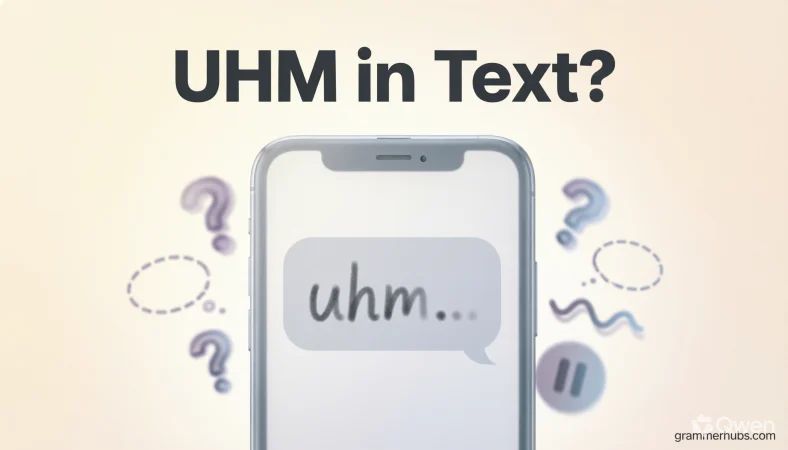
Uhm in a text almost never means what your anxious brain thinks it means. It’s a written stand-in for a spoken pause and depending on the words around it, it can signal hesitation, mild sarcasm, surprise, or genuine thinking-it-over. Rarely is it a red flag on its own.
This word shows up everywhere in texts, Instagram comments, Discord servers, even the occasional Slack message from a coworker who isn’t sure how to phrase bad news. And because text strips out tone of voice, uhm ends up carrying a job that a raised eyebrow or a half-laugh would normally do in person. That’s exactly why it gets over-analyzed so often.
Below, we’ll go past the surface definition and look at where this word actually comes from, what linguists have found about why people use it at all, and how to read (and respond to) it without spiraling.
What Uhm Actually Means
At its core, uhm is what linguists call a filled pause, a sound people make while they’re mentally organizing what to say next, rather than staying silent. When it’s typed out instead of spoken, it keeps that same function but picks up extra shades of meaning depending on punctuation, capitalization, and what follows it.
In practice, uhm in a text usually points to one of these:
- A real pause to think the person needs a second before answering honestly.
- Sarcasm or disbelief, a soft, slightly teasing way of saying seriously?
- Discomfort the topic feels awkward or unexpected.
- Confusion they’re not sure what you meant and are stalling before asking.
Here’s the difference tone makes in two nearly identical messages:
You: I told your mom about the surprise party by accident. Friend: uhm… why would you do that??
That’s controlled panic wearing a filler word as a disguise. Compare it with:
You: Can you help me move this weekend? Friend: uhm, let me check my schedule first.
Same word, completely different energy one is stressed, the other is just someone thinking out loud. The word itself is neutral. What surrounds it does the actual talking.
Why We Say Uhm in the First Place
Texting inherited this habit somewhere in the early 2000s, once instant messaging made casual, speech-like writing normal. Typing uhm lets people import a piece of vocal tone, the pause, the hesitation into a format that otherwise flattens everything into plain text. Over time, especially as texting slang and internet culture matured, uhm picked up extra jobs beyond pure hesitation: softening a correction, adding sarcasm, or signaling mild shock. That’s the version we mostly see today.
How It Shows Up Depending on Where You See It
The meaning shifts slightly depending on the platform, mostly because the stakes of the conversation shift too.
In a text with a partner or close friend, uhm tends to read as low-stakes hesitation:
Partner: I might be running late tonight. You: uhm, how late are we talking?
That’s a mild concern, not an accusation.
In social media comments, it’s often used as a hook to grab attention before the real point:
uhm, did anyone else catch this??
In gaming chats, it frequently softens a callout so it doesn’t land as harsh:
Teammate: why’d you push alone? You: uhm, I thought you had my back lol
In everyday banter, it can be pure playful exaggeration:
Friend: I ate your leftovers. You: uhm, excuse me?
None of these are really about confusion. They’re small performances of tone, standing in for the raised eyebrow or half-smile you’d use if you were talking in person.
Where People Get It Wrong
A few misreadings come up constantly, and most of them boil down to reading uhm in isolation instead of reading the whole message.
Uhm always means someone’s upset. Usually not. More often it’s a half-second of hesitation, not anger.
It’s always sarcastic. Sometimes it’s just someone honestly thinking before typing a real answer with no attitude involved.
It’s rude no matter where you use it. In casual conversation, it’s harmless. In a client email, it can land as unsure or unpolished but that’s a register mismatch, not a rule about the word itself.
It secretly means something inappropriate. It doesn’t. There’s no hidden or offensive definition lurking underneath uhm. Any discomfort it causes usually comes from the ambiguity of text itself the same reason k. feels colder than okay! not from the word carrying some coded meaning.
Uhm and hmm are interchangeable. They’re not. Uhm leans toward hesitation or reaction; hmm leans toward thinking something over. Swap one for the other and the tone of a message actually shifts.
Uhm Compared to Similar Words
A handful of related fillers get used in overlapping ways, but they’re not identical twins. Here’s how they typically stack up:
| Word | Common Feel | Best Fit |
| Um / Umm | Plain hesitation | Neutral, everyday pauses |
| Uh | Quick, low-emotion pause | Fast reactions |
| Erm | Slightly more polite, more common in British English | Soft disagreement or doubt |
| Hmm | Thoughtful consideration | Weighing an idea |
| Uhm | Hesitation with an emotional edge | Sarcasm, mild shock, awkwardness |
The reason uhm gets misread more than its cousins is right there in that last row it’s the most emotionally loaded version of the bunch, which makes it the easiest to misjudge.
How to Actually Respond to It
If you’re not sure what someone meant by uhm, your reply doesn’t need to overanalyze it just match the likely tone.
If it feels playful:
haha uhm what do you mean by that 👀
If it feels genuinely hesitant:
no worries, take your time thinking about it
If it’s in a professional message and you want to keep things smooth:
Happy to explain further if anything’s unclear.
If you just want a low-pressure, neutral reply:
let me know what you’re thinking, no rush
When genuinely unsure, a light follow-up question almost always resolves the ambiguity faster than guessing.
Regional Habits and Where It Doesn’t Translate
Uhm as a typed word is mostly an English-language texting habit. Spoken filler sounds exist in basically every language Spanish speakers often use este, Japanese speakers use eto, and French uses euh but English speakers are unusually likely to actually type theirs out in casual messages.
Within English, there’s a small regional split: American texting leans on um and uhm almost interchangeably, while British English favors the term in the same spots. Younger, internet-heavy communities also tend to stretch uhm further from its original meaning, using it more for humor and light sarcasm than genuine hesitation.
On Dating Apps and Group Chats
On apps like Tinder or in casual Discord and X threads, uhm is rarely a real objection it’s usually a flirty or teasing nudge:
Match: I’ve never seen Star Wars. You: uhm, we need to talk 😳
The safest move here is matching the energy rather than overanalyzing the word. If someone’s using uhm to tease you, a defensive reply lands flat; a playful one keeps the exchange going.
Should You Use It at Work?
Generally, no. In a formal email or a message to a client, uhm tends to read as uncertain or under-prepared, even though as the research above shows hesitation itself is a completely normal part of thinking. The word just doesn’t fit the register.
A few swaps that keep the honesty without the casual tone:
- Let me think that through and get back to you.
- Good question, give me a moment to check.
- I want to double-check the details before I answer.
Quick Answers to Common Questions
Does uhm mean someone’s mad at me?
Not usually. It’s more often a half-second of hesitation than an accusation.
Is uhm the same as um?
Nearly. Uhm tends to carry a slightly stronger emotional undertone in text.
Why type out a pause at all?
Because text removes tone of voice, and uhm helps recreate that missing pause or hesitation.
What’s the real difference between uhm and hmm?
Uhm signals hesitation or a reaction; hmm signals someone weighing an idea.
Can it be flirty?
Yes especially on dating apps, where it’s often a teasing nudge rather than literal doubt.
Is it okay to use in a work email?
It’s better avoided. Swap it for something like let me check and get back to you.
The Bottom Line
Uhm is a small word carrying a surprisingly specific job: recreating the pause, the hesitation, or the half-raised eyebrow that gets lost the moment a conversation moves from voice to text. It’s not inherently rude, sarcastic, or coded context and the words around it decide that every time.
Next time it shows up in your messages, you don’t need to spiral. Read the sentence around it, not just the word itself, and you’ll almost always land on the right read.
Discover More About!
Ick Meaning in Text 😬 Instant Turn-Off Slang Explained
Awh in Texting: in Dating Apps & Everyday Slang
TISM? Autism Slang Everyone Misusing in TEXT and MEME

I’m Emma Reynolds, and I live and breathe everyday slang at GrammerHubs.com. I love breaking down the weird, short ways we text each other. No boring grammar lessons here, just real talk about how we actually chat.







1 thought on “Uhm in Text? Why You’re Overthinking It”