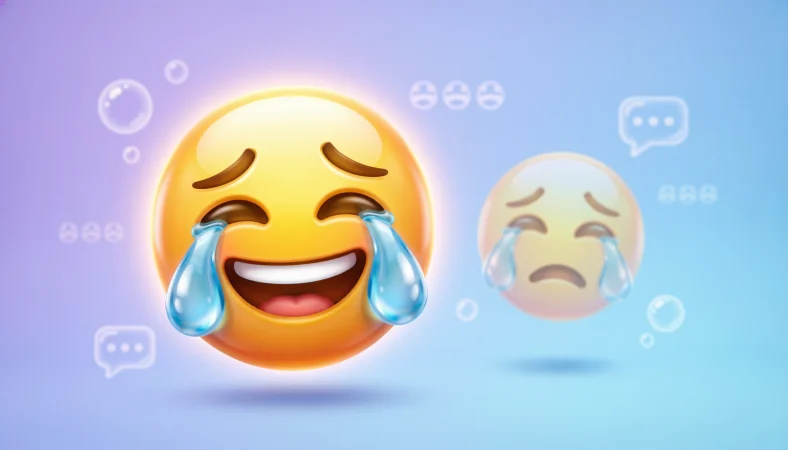
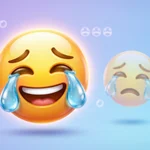
The crying emoji almost never means what it looks like anymore. 😭 usually signals laughter or overwhelm, not sadness. 😢 is the one that still means real tears. Get the wrong one, and you might respond to a joke like it’s a crisis or the other way around.
Here’s a scenario most of us have lived through. A friend texts you a single 😭. No caption. Your brain has about two seconds to decide: is this a crisis, or did their cat just do something ridiculous?
That split-second confusion is exactly why this emoji trips people up. It shows up in texts, Instagram comments, TikTok captions, dating app openers, even the odd Slack message and depending on who sent it, it can mean two almost opposite things.
What The Crying Emoji Actually Means
There’s no single crying emoji. There’s a small family of them, and each one carries its own emotional weight:
- 😢 Crying Face one tear, quieter sadness, mild disappointment
- 😭 Loudly Crying Face big emotion, and today that usually means laughter or being overwhelmed, not grief
- 🥲 Smiling Face with Tear bittersweet, a smile that’s trying hard
- 😂 Face with Tears of Joy pure laughter, often confused with 😭 because they look alike in a small chat bubble
😭 is the one that causes most of the confusion, and there’s a documented reason for that. According to Dictionary.com’s breakdown of generational emoji use, millennials originally used the loudly crying face for real distress, sadness, frustration, relief while Gen Z has shifted it toward positive feelings, using it when something is so funny, cute, or sweet that the reaction feels overwhelming.
So a message like this:
Friend: I just tripped in front of my entire office 😭
You: NO 😭 tell me everything
isn’t sad at all. Compare that to:
Friend: My dog passed away last night 😢
Same emoji family, completely different weight. The only way to tell them apart is context: what came before the emoji, who sent it, and where.
Where This Emoji Came From
For years, 😂 was the internet’s default reaction to anything funny. Oxford Dictionaries even named it their Word of the Year in 2015, calling it the era’s most-used emoji. That changed. Wikipedia’s entry on the emoji notes that its popularity started declining in the early 2020s as Gen Z began seeing it as something older people used, and it was largely replaced by the loudly crying face and the skull emoji among people in their mid-twenties and younger.
Why 😭 specifically? A few language and culture writers have offered the same explanation: laughing hard enough to actually tear up is a real physical response, so using the crying face for something hilarious isn’t really ironic, it’s technically accurate, just borrowed from an unexpected symbol. It also simply felt fresher than an emoji that had been everywhere for over a decade.
The result is an emoji stuck between two identities. It can still mean genuine grief. It’s now just as likely to mean I can’t believe that just happened.
How People Actually Use It
In everyday texting, between close friends, 😭 works almost like punctuation, a way to say that’s a lot without spelling it out.
Text 1: I called my teacher ‘mom’ in class today 😭 Text 2: STOP that’s so real 😭
On social media, it often shows up stacked two, three, five in a row to turn up the volume on a reaction, usually secondhand embarrassment or disbelief.
Comment: the way he just walked away 😭😭😭 I can’t
In gaming chats, it tends to mean frustration or disbelief more than sadness.
Player 1: bro got sniped through a wall Player 2: 😭 how is that even possible
With older relatives or in more formal family conversations, it usually keeps its original meaning: actual sympathy or sadness.
Mom: Grandpa isn’t feeling well today 😢
Notice the pattern. The closer the conversation is to internet culture texting, comments, gaming the more likely 😭 means something funny. The more traditional or personal the conversation, the more likely it’s literal.
Where People Get It Wrong
The most common mistake is assuming the emoji only has one meaning: either always funny or always sad. It doesn’t. Three things decide which one you’re looking at:
- Who sent it? A close friend leans toward the ironic, funny use. A parent or older coworker usually means it literally.
- What came right before it. A joke followed by 😭 reads differently than bad news followed by 😭.
- How many times it’s repeated. One 😭 alone can read as genuinely upset. Three or four in a row, especially with capital letters, almost always reads as laughter.
People also mix up 😭 with 😂 constantly, since they can look nearly identical at a glance on a small screen. The difference matters: 😂 is straightforward laughter, while 😭 usually carries more intensity, funny, overwhelmed, or occasionally still sad.
One real risk worth naming: sending 😭 in response to actual bad news, a layoff, a breakup, a death can land badly if the other person reads it as amusement instead of empathy. If there’s any doubt, pair the emoji with an actual sentence.
Similar Emoji And What They Mean Instead
| Emoji | What it usually means | Best used for |
| 😢 Crying Face | Quiet, genuine sadness | Something mildly upsetting |
| 😭 Loudly Crying Face | Overwhelm funny or sad, context decides | Big reactions, either direction |
| 🥲 Smiling Face with Tear | Bittersweet, a forced smile | Mixed or nostalgic emotions |
| 😂 Face with Tears of Joy | Straightforward laughter | Something genuinely funny |
| 💀 Skull | I’m dead from laughing | Gen Z’s other go-to for humor |
| 😩 Weary Face | Frustration or exhaustion | Stressful, draining situations |
If you want a word instead of an emoji, I’m sobbing, I’m deceased, or not me crying or all carry roughly the same energy as a stack 😭😭😭.
How To Respond, By Situation
Casual, with a friend omg stop 😭 what happened next
Playing along with the humor you and me both 😭🤝
Professional or client-facing skip the emoji, match the sentiment in words That sounds really tough. Let me know if there’s anything I can do to help. or, for good news: That’s fantastic congratulations!
When you genuinely can’t tell which way it’s meant Wait, happy crying or sad crying? 😅
That last one is worth using more often than people think. Asking is faster than guessing wrong, and nobody’s ever been offended by a quick check-in.
Does This Change Across Regions And Languages?
Emoji themselves are standardized worldwide through Unicode, so the symbol looks the same everywhere. The meaning attached to it doesn’t travel quite as evenly.
The 😭 means laughing, not crying shift is strongest in English-language, US-driven internet culture, and it’s spread from there through platforms like TikTok and Twitter/X. In plenty of other languages and regions, older users and sometimes entire cultures still default to the literal reading: tears mean sadness. Some communities lean on different symbols entirely for this is too much humor, rather than adopting 😭 the way English-speaking Gen Z did.
There’s no universal rulebook here. Platform culture and generation shape the meaning more than geography alone.
On Dating Apps And Online Communities
On apps like Tinder or Hinge, 😭 often softens something a little embarrassing, turning an awkward admission into something lighthearted.
Match: I definitely stalked your Instagram before we matched 😭
On Twitter/X and in Reddit threads, it’s a common reaction to chaotic or relatable content functioning almost like a reaction image, but typed.
If someone sends 😭 after sharing something more personal or vulnerable, don’t assume they’re joking. A simple haha same or a genuine follow-up question works safely either way.
Is There Ever A Hidden Or Negative Meaning?
Mostly, no 😭 is one of the less loaded emoji out there. But tone around it still matters:
- Reacting to someone’s real bad news with 😭 can come across as dismissive if it reads as laughing at them instead of with them.
- Sarcastic or exaggerated use 😭😭😭 so sad about something trivial can feel like mockery, depending on who you’re talking to.
- Occasionally people use it to needle someone’s post or opinion. The emoji itself isn’t the insult; the words around it usually are.
As with most digital communication, the relationship and the surrounding text carry more meaning than the symbol on its own.
Should You Use It At Work?
Generally, no. In emails, client messages, or anything formal, the crying emoji in any version tends to read as unprofessional, or gets misread entirely by someone outside your usual texting circle. A relaxed internal team chat might be the one exception, depending on your workplace’s culture.
Safer swaps for professional settings:
- That’s genuinely hilarious.
- That sounds stressful. I’m sorry you’re dealing with that.
- Amazing news, congratulations!
Frequently Asked Questions
Does 😭 always mean someone is sad?
No. In most casual texting today, it’s more likely to mean something funny, overwhelming, or relatable than literal sadness.
What’s the actual difference between 😭 and 😢?
😢 tends to mean quieter, genuine sadness. 😭 signals a bigger reaction which today usually means laughter, though it can still mean real distress depending on context.
Why did Gen Z move away from 😂?
Largely generational: 😂 became associated with older users and felt overused, so 😭 and 💀 took over as the fresher way to signal laughter.
Is it rude to respond to bad news with 😭?
It can land badly if the other person reads it as amusement. Pairing it with a sentence removes the ambiguity.
Is the crying emoji okay to use at work?
Best avoided in formal or client communication. A casual, close-knit team chat might be the exception.
How can I tell if someone means it sadly or as a joke? Look at what they said right before it, think about your relationship with them, and consider the platform. When it’s genuinely unclear, just ask.
The Bottom Line
The crying emoji isn’t one thing anymore, it’s become one of texting’s most context-dependent symbols. 😢 still leans toward real sadness. 😭 has largely shifted toward laughter and overwhelm, especially among younger users, while still carrying its original meaning in more personal or traditional conversations. 🥲 sits somewhere in between. None of them have a fixed meaning you can rely on without reading the room first.
The approach is simple: look at who sent it, what came before it, and how many times it’s repeated and when it’s still unclear, just ask. That one habit will save you from more than a few awkward replies.
Discover More About!
Uhm in Text? Why You’re Overthinking It
Down to Earth Meaning: What Does It Really Mean?
Under the Weather Meaning: What Does It Really Mean? Examples & Origin

I’m Emma Reynolds, and I live and breathe everyday slang at GrammerHubs.com. I love breaking down the weird, short ways we text each other. No boring grammar lessons here, just real talk about how we actually chat.





1 thought on “Crying Emoji Really Means. It’s Not Sadness Anymore. Here’s Why”