Quick Answer Up Front
In texts and online profiles, “DNI” means “do not interact.” It is a boundary. When someone writes “DNI if you’re under 18” on their profile, they are telling certain people not to follow, message, or reply to them.
DNI is not an insult. It is a filter. It says “we are not a good match, so let’s not engage.” You will see it most on Tumblr, Twitter/X, and TikTok. Think of it as a “no trespassing” sign that is polite about it.
Introduction
You open someone’s profile. Under their name it says: “DNI minors, DNI proshippers.” You have no idea what you just read. Are they mad? Is this about you?
Relax. “DNI” is one of the most misunderstood bits of internet slang. It looks harsh. It is actually about safety and comfort. People list who should not interact with them so everyone can avoid awkward or unsafe contact. This guide explains what DNI means, where it came from, and how to read those profile lists without panic. By the end, those three letters will feel friendly, not frightening.
Definition & Meaning
“DNI” stands for “do not interact.” It is a request, phrased as a rule. The person sets a boundary about who should engage with their content.
Real examples from profiles:
- “DNI if under 18” (minors should not follow or message me)
- “DNI proshippers” (people in a certain fandom group, stay away)
- “DNI if you post spoilers” (spoiler-posters, keep your distance)
- “Basic DNI: homophobes, racists” (bigots are not welcome here)
The format is almost always “DNI” + a group or behavior. The group part changes. The structure does not.
Important: DNI is aimed at categories, not at you personally. “DNI minors” is not about one minor. It is a blanket rule. If you are not in the listed group, the DNI does not apply to you.
There is a close cousin: “BYF” (before you follow). BYF lists things to know before following. DNI lists who should stay away. Profiles often pair them. “BYF: I post late. DNI: minors.”
A rarer meaning: in some workplaces, DNI means “do not invite” on meeting notes. In texting, this almost never comes up. The “do not interact” meaning owns the abbreviation online.
Another edge case: in intelligence and government contexts, “DNI” is the Director of National Intelligence. You will never see this in a text thread unless you work in that world. If your friend texts “dni,” they are not talking about spy agencies.
One more: some people read “dni” as “do not insult.” It is not standard. If someone uses it that way, they invented it on the spot. The safe default is always “do not interact.”
Background & History
DNI grew up on Tumblr in the early 2010s. Tumblr’s fandom culture needed boundaries. Millions of strangers shared art, fiction, and opinions. Conflicts flared daily. Users started posting “do not interact” lists to pre-filter their audience. It was crowd control for blogs.
The abbreviation “DNI” made the lists short enough for bios. Tumblr bios had limited space. “DNI” saved characters. The format spread from blog to blog like a template.
When fandom users moved to Twitter, DNI came with them. Twitter bios are even shorter. DNI lists became a standard profile feature. “DNI” + criteria. Everyone in fandom Twitter knew the code.
TikTok gave it a third life. Creators put DNI in bios and video captions. “DNI if you hate pineapple pizza” can be a joke. “DNI minors” on an adult creator’s page is serious safety.
Over time, DNI lists got longer and more specific. Some profiles list ten or more groups. Critics say long lists look hostile. Supporters say clear boundaries prevent real harm. The debate continues. The abbreviation stays.
The early Tumblr era deserves detail. Fandom in 2012 was wild. Ship wars raged. Callout posts spread. Strangers argued in reblogs for days. DNI lists were a practical tool. A fan artist could write “DNI anti-shippers” and cut off half the drama before it started. It was not perfect. Determined trolls ignored it. But it helped.
The move to Twitter changed the tone. Twitter is faster and angrier than Tumblr. DNI lists there got sharper. They also got mocked. “DNI” became a meme format. People wrote joke DNIs like “DNI if you put milk before cereal.” The serious and silly versions now coexist.
Usage in Various Contexts
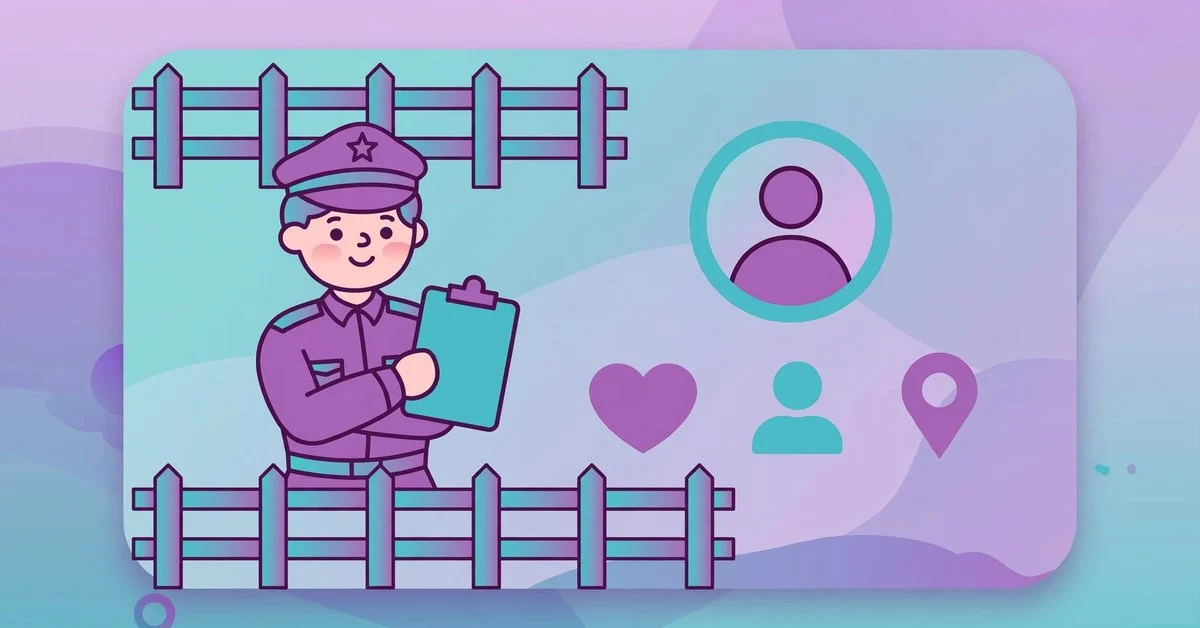
Here is DNI in real-style settings:
Fandom profile (the classic):
Bio: “she/her | 22 | fanartist | DNI proshippers, DNI under 16”
TikTok creator (safety):
Caption: “DNI minors, this account posts adult humor”
Twitter user (comfort):
Bio: “DNI if you spoil new episodes. I watch late.”
Group chat (rare, playful):
A: “who ate my leftovers”
B: “dni, it wasn’t me”
That last one is a joke. DNI in casual chat is almost always playful. The serious version lives in bios and pinned posts.
Dating apps: “DNI” appears in dating bios too. “DNI if you don’t want kids” or “DNI smokers.” It works the same way. A filter, stated up front.
Fan fiction sites (AO3, Wattpad):
Author’s note: “DNI if you don’t like slow burn. This fic is 200k of it.”
Writers use DNI to filter readers. It prevents angry comments from people who were warned. “I said DNI” is a complete defense in fic culture.
Art communities:
Bio: “commissions open | DNI art thieves, DNI AI bros”
Artists protect their work with DNI lists. Art theft is a real problem. Stating “DNI art thieves” will not stop thieves. But it sets the rule clearly.
Common Misconceptions & Clarifications
Misconception 1: “DNI is aggressive.” It can read that way. But the intent is usually protective. A 25-year-old artist telling minors not to interact is keeping everyone safe. Tone and intent differ.
Misconception 2: “DNI is about me personally.” Almost never. DNI targets groups and behaviors. Unless someone DMs you saying “DNI,” it is not personal.
Misconception 3: “DNI means I hate those people.” Not exactly. “DNI proshippers” means “our views clash, so let’s not engage.” It is conflict avoidance, not hatred. Though some DNI lists do target hate groups, and there the dislike is the point.
Misconception 4: “DNI is legally binding.” It is not. It is a social request. Strangers can still view public posts. DNI works on honor and on block buttons, not on law.
Misconception 5: “Long DNI lists are normal everywhere.” They are normal in fandom spaces. Outside fandom, a ten-item DNI list looks intense. Context sets the norm.
Misconception 6: “DNI means the person is mean.” Some of the kindest creators have strict DNIs. Boundaries and kindness coexist. A person can welcome most people warmly while keeping a few categories at distance.
Misconception 7: “If I ignore a DNI, nothing happens.” Sometimes true. Sometimes you get blocked. Sometimes you start a fight. The cost of ignoring is unpredictable. Respecting costs nothing.
Similar Terms & Alternatives
| Term | What It Means | How It Differs From “DNI” |
|---|---|---|
| BYF | Before you follow | Info for followers; DNI is a keep-away rule |
| Do not perceive | Joking “don’t look at me” | Playful; DNI can be serious |
| Blocked | Cut off by the platform | Enforced; DNI is a request |
| Muted | Hidden from your feed | Your own filter; DNI is their filter |
| NSFW | Not safe for work | Content warning; often paired with DNI minors |
| 18+ | Adults only | Age gate; DNI minors says the same thing |
| Boundaries | Personal limits | The general concept; DNI is one format |
Use “DNI” in fandom and creator spaces. Use plain language elsewhere. “Please don’t message me about X” works everywhere.
DNI lists usually live inside profiles, so it helps to know what “bio” means in text too. Another classic you will bump into in the same spaces is CMB.
How to Respond
If the DNI does not apply to you: do nothing. Carry on. The list was not for you.
If the DNI applies to you: respect it. Do not follow. Do not reply. Do not argue. Just move on. The internet is big. Find your people elsewhere.
Casual: “Got it, not my lane.” Short and respectful. Good if someone points you to their DNI.
Funny: “DNI noted, I shall perceive from a great distance.” Only as a joke with friends. Do not joke about someone’s serious boundary to their face.
Professional: DNI rarely appears at work. If a colleague uses it playfully, laugh and move on. If it appears in a work dispute, treat it as a boundary and disengage.
Privacy-conscious: You never have to explain why you are not interacting. Silence is a complete response to a DNI that covers you.
When you disagree with a DNI: keep scrolling. Arguing with someone’s boundary list never ends well. Their profile, their rules.
When writing your own DNI: keep it short and clear. List what matters. “DNI minors, DNI spoilers” beats a paragraph. Update it when your needs change. And remember: a DNI works best paired with the block button, not instead of it.
When a friend’s DNI covers you as a joke: laugh. “DNI people who steal fries” from your best friend is affection. Context is everything.
Regional or Cultural Differences
DNI is strongest in US and UK fandom culture. Tumblr, Twitter, and TikTok fandoms in these countries use it daily. The format is instantly recognized there.
In South Asia, DNI appears in English-language fandom spaces. K-pop and anime fan accounts use it. Outside fandom, it is unknown. A family WhatsApp group would not understand it.
In the Philippines, fan culture is huge. K-pop stan Twitter uses DNI the same way as the US. The meaning crossed over with the fandom itself.
In non-English fandoms, local equivalents exist. The concept of “do not interact” lists translates. The letters “DNI” sometimes travel with it, sometimes not.
Age matters more than region. Under-30 internet users recognize DNI. Over-40 users usually do not. It is a generational marker as much as a regional one.
In Latin America, fandom Twitter uses DNI in English even in Spanish and Portuguese chats. “DNI” stays untranslated. The concept crossed with the fandom. Local fans learn it from international mutuals.
In East Asia, K-pop stan culture uses DNI heavily on Twitter. Korean, Japanese, and Chinese fan accounts write “DNI” in English inside otherwise local-language bios. It is one of those global fandom codes.
Comparison with Similar Terms
| DNI | BYF | Block | |
|---|---|---|---|
| Full meaning | Do not interact | Before you follow | Platform-enforced cutoff |
| Force | Social request | Helpful info | Technical barrier |
| Target | Specific groups | All potential followers | One account |
| Tone | Firm | Friendly | Cold |
| Example | “DNI minors” | “BYF I post spoilers” | (no message at all) |
Think of it as three tools. BYF informs. DNI warns. Block enforces. Most profiles use the first two wisely. The third is the backup.
Usage in Online Communities & Dating Apps
On Tumblr, DNI was born. Fandom blogs still use it. “DNI” lists sit in sidebars and pinned posts. It is part of the platform’s culture.
On Twitter/X, DNI thrives in fandom and art communities. Bios carry the lists. Quote-tweets sometimes add “DNI” to control replies.
On TikTok, creators use DNI in bios and captions. Adult creators use “DNI minors” for safety. Comedy creators use joke DNIs. Both are normal.
On dating apps, DNI filters matches. “DNI if you’re looking for casual” saves everyone time. Dating DNIs are blunt by design.
On Discord, server rules sometimes say “DNI” for certain topics. “DNI drama in general chat” keeps the peace.
On Reddit, DNI is rare. Reddit has its own norms. Sub rules do the filtering. You will see DNI mainly in fan-art and fandom subs.
On Instagram, creators put DNI in bios next to business emails. “DNI minors | collabs: email me” is a standard creator bio. The boundary and the business sit side by side.
Hidden or Offensive Meanings
DNI has no hidden offensive meaning. The letters are clean.
But DNI lists can cause offense. A list that targets a protected group reads as bigotry. “DNI” + a slur is just a slur with extra steps. Most communities reject that use.
Some DNI lists target fandom groups in heated wars. Outsiders see drama. Insiders see safety. Both views have truth. If a list confuses you, remember you are reading someone else’s boundary, not a universal rule.
The mildest risk: a joke DNI that lands wrong. “DNI pineapple pizza lovers” is funny until someone takes it seriously. Tone tags exist for a reason.
Suitability for Professional Communication
DNI at work: avoid. It reads as fandom slang. “Please don’t contact me about X” is the professional version.
DNI in creator business: fine. If you run an online brand, a DNI in your bio is normal. “DNI minors” on a business account is responsible.
DNI in email: never. Write the boundary in full sentences. “Please direct support questions to our help desk” beats “DNI support questions.”
When someone sets a DNI at you professionally: respect it. Redirect. Do not debate it. Professional relationships run on respected boundaries.
Rule of thumb: DNI belongs to internet culture. Workplaces have their own language. Translate, don’t transplant.
FAQs
What does “DNI” mean in texting?
“Do not interact.” It is a boundary telling certain people not to engage with you.
Is “DNI” rude?
It can sound blunt. But it is usually about safety or comfort, not hostility.
What does “DNI minors” mean?
People under 18 should not follow, message, or interact with the account. Common on adult creators’ pages.
What is the difference between DNI and BYF?
DNI says who should stay away. BYF (before you follow) shares info for potential followers.
Do I have to obey someone’s DNI?
It is a social request, not a law. But respecting it is basic online manners.
Can I use DNI on a dating profile?
Yes. “DNI smokers” or “DNI if you want kids” style filters are common and effective.
What does “DNI” mean outside fandom?
Almost nothing. It is fandom-born slang. Outside those spaces, spell out your boundary instead.
Why do DNI lists mention “proshippers” and “antis”?
Those are fandom groups with clashing views on fictional content. The DNI keeps the two sides from fighting in replies. You do not need to pick a side. Just respect the list.
Can a DNI list get you in trouble?
A DNI itself breaks no rules. But a list targeting protected groups can violate platform hate policies. Keep lists about behavior and comfort, not identity attacks.
Conclusion
“DNI” looks like a warning. It is really a boundary. “Do not interact” saves everyone time and trouble. The person states their limits. You decide if you fit. No drama needed.
Next time you see a DNI list, read it calmly. If it is not about you, ignore it. If it is, respect it. That is the whole etiquette.
And if you run an account of your own, consider writing one. A clear DNI is a kindness. It tells people where they stand before anyone gets hurt. Boundaries are not walls. They are maps.
Want one more decoded? See what NK means in text. Profile slang rewards the curious.
Meta description: What does “DNI” mean in text? “Do not interact.” A profile boundary used on Tumblr, Twitter, and TikTok. Full guide here.

I’m Chloe Mitchell, a passionate writer at Grammerhubs.com specializing in English grammar, word meanings, slang terms, and modern language trends. I create clear, engaging, and easy-to-understand content that helps readers master everyday English with confidence.










