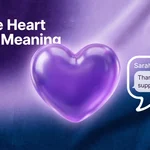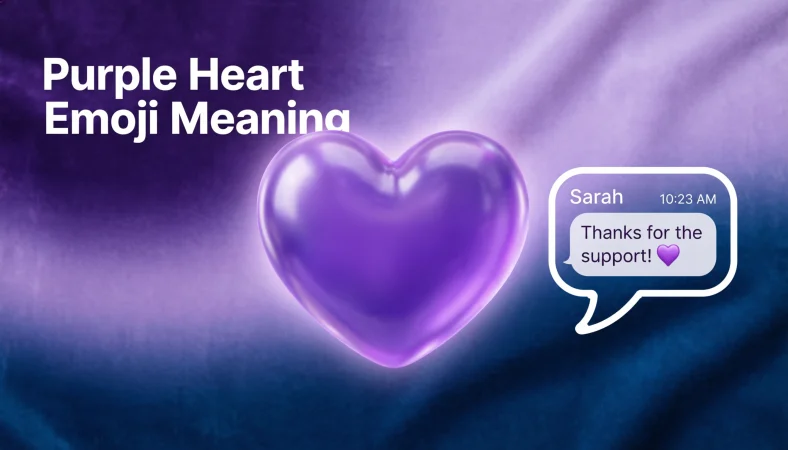
In texting, the purple heart emoji (💜) usually means calm, deep, and loyal love it’s often used for a partner, a close friend, or a favorite artist, and it’s also the official symbol BTS fans use to say I trust and support you completely. It rarely means something negative. Context is everything.
You just got a text with a single purple heart. No words. Just 💜. Your brain immediately starts working overtime: Does this mean love? Is it just a friendly thing? Am I reading too much into this?
This is one of the most searched emoji meaning questions out there, and for good reason heart emojis carry different weight depending on their color, and purple sits in a strange, beautiful middle ground. It’s not as loud as red ❤️, not as safe as yellow 💛, and not as final as black 🖤.
Understanding this small purple symbol matters more than you’d think. It shows up in texting, Instagram comments, TikTok captions, dating app bios, and even professional Slack messages (yes, really). Knowing the difference between a purple heart from a girl, a purple heart from BTS fandom, and a plain old friendly purple heart can save you from an awkward misread or help you send the right signal yourself.
Let’s break down exactly what this emoji means, where it came from, and how to respond to it.
Definition & Meaning of the Purple Heart Emoji
At its core, the purple heart emoji (💜) represents compassion, understanding, and a calm, deep kind of affection. Unlike the red heart, which screams romance, purple carries a quieter emotional tone think loyalty and trust rather than fireworks.
Here’s how it typically breaks down by user intent:
- Romantic but understated love I care about you deeply, but I’m not rushing anything.
- Platonic closeness best friends often use it to say you mean a lot to me without romantic implication.
- Fandom loyalty especially tied to BTS, where purple represents trust between the group and fans (more on that below).
- Support and solidarity purple is also associated with causes like domestic violence awareness and addiction recovery support.
Real-life example:
Sarah: Had such a good time today 💜 Jake: Me too, we should do this again soon
Here, the purple heart softens the message and adds warmth without declaring anything romantic outright. That’s the emoji’s real superpower it’s emotionally rich but low-pressure.
Compare that to:
Alex: Miss you 💜
Here, tone and relationship history matter. Between partners, it reads romantic. Between friends, it reads sincere and warm, not flirty.
Background & History of the Purple Heart Symbol
The color purple has carried symbolic weight for centuries, long before emoji keyboards existed. Historically, purple was associated with royalty, luxury, and spirituality dye made from purple was so expensive in ancient times that only nobility could afford it. That legacy of special and elevated still lingers in how people use the color today.
The purple heart emoji itself was approved as part of Unicode 6.0 in 2010 and became widely available on smartphones shortly after. But its cultural meaning really took off later, driven heavily by internet culture and fandom communities.
The biggest turning point came from K-pop, specifically BTS. Leader RM popularized the phrase I purple you, explaining that purple is the last color of the rainbow, meaning it represents trust and love long enough to encompass all other colors essentially, I’ll trust and love you for a very long time. That phrase exploded globally and turned the purple heart emoji into a fandom staple almost overnight.
Today, this emoji is common across:
- Texting apps (iMessage, WhatsApp)
- Social media (Instagram captions, TikTok comments)
- Fan communities (K-pop, anime, gaming)
- Advocacy movements (mental health, domestic violence awareness ribbons)
Its meaning has broadened, but the emotional core deep, steady affection has stayed consistent.
Usage in Various Contexts
Where you see the purple heart changes how you should read it. Here’s a breakdown across common platforms:
In texting:
Mom: Proud of you today 💜
This is warm, familial affection no romantic reading needed.
On Instagram/TikTok:
Caption: Grateful for this squad 💜
Used to express group appreciation, often among friends or fan pages.
In gaming communities:
GG team, that was such a clean win 💜
Here it signals camaraderie and good sportsmanship, not romance at all.
In fandom spaces (BTS especially):
Army forever 💜
This is a direct nod to the I purple you phrase trust, loyalty, unconditional support.
In casual flirting:
Person A: Can’t stop thinking about last night 💜
Context (tone, history, timing) pushes this toward romantic interest, but it’s intentionally softer than a red heart often a testing the waters move.
Common Misconceptions & Clarifications
A few misunderstandings pop up often with this emoji, so let’s clear them up.
Misconception 1: Purple heart always means romance. Not true. It’s one of the least romantically aggressive heart emojis. Red and pink are the ones that clearly signal romantic intent.
Misconception 2: It’s the same as the Purple Heart military medal. This is a common disambiguation issue. The Purple Heart Medal is a real U.S. military decoration awarded to service members wounded or killed in combat. The emoji has zero connection to this and should never be used in a way that trivializes the honor this is an important distinction for professional or public content.
Misconception 3: It’s just a BTS thing. While fandom usage boosted its popularity massively, purple hearts are used broadly across cultures and relationships, not exclusively by K-pop fans.
Misconception 4: It’s inappropriate or has a hidden negative meaning. Unlike emojis such as the eggplant or peach, the purple heart has no widely recognized offensive slang meaning. It’s considered one of the safer, warmer heart colors.
Similar Terms & Alternatives
If you’re deciding between heart emojis, here’s how purple stacks up:
| Emoji | Common Meaning | Emotional Intensity |
| ❤️ Red Heart | Passionate romantic love | High |
| 💛 Yellow Heart | Friendship, happiness | Low-medium |
| 💚 Green Heart | Nature, jealousy (playful), support | Low-medium |
| 💙 Blue Heart | Trust, loyalty, calm affection | Medium |
| 🖤 Black Heart | Dark humor, sorrow, edgy affection | Varies widely |
| 🤍 White Heart | Pure, sincere, minimalist love | Medium |
| 🧡 Orange Heart | Warmth, encouragement | Low-medium |
| 💜 Purple Heart | Deep, calm, loyal affection; fandom trust | Medium-high |
People also use text-based alternatives like purple you, 🫶, or 💗 to express similar sentiments depending on the vibe they’re going for.
How to Respond to This Term
Not sure how to reply when someone sends you a purple heart? Here are a few response styles:
Casual response:
Aww 💜 right back at you
Funny/playful response:
Did you just purple me? BTS Army detected 👀
Professional response (yes, this happens in team chats):
Thanks for the support 🙏 (skip the heart entirely in formal settings more on this below)
Privacy-conscious/neutral response:
Thanks, that’s really sweet
The key is matching the emotional register they used. If it feels romantic, gauge your own feelings before mirroring it back the same way.
Regional or Cultural Differences
Emoji interpretation isn’t universal, and purple hearts shift slightly across regions and languages.
- South Korea & global K-pop fandoms: Strongly tied to I purple you an almost sacred phrase among BTS Army members worldwide.
- Western usage (US, UK, Canada): More generalized used for close friendships, low-key romance, and support messages.
- South Asia & Southeast Asia: Frequently used in fan communities and casual texting alike, often interchangeably with red or pink hearts among younger users.
- Professional/corporate cultures globally: Purple hearts (and heart emojis generally) are typically avoided in workplace communication regardless of country, as they can read as overly casual.
Slang usage also varies some communities use purple heart as shorthand for loyalty in captions (purple heart gang), while others use it strictly in reply to fandom-related content.
Comparison with Similar Expressions
| Expression | Meaning | Typical Use Case |
| I purple you | Trust and love beyond time | BTS fandom, deep affection |
| Sending love | General care, non-romantic | Friends, family |
| 💜 emoji | Calm, loyal affection | Texting, captions |
| ❤️ emoji | Passionate romance | Relationships |
| 🫶 (heart hands) | Warm appreciation | Social media, gratitude posts |
The purple heart lands in a unique spot: warmer than a thumbs-up, less intense than a red heart.
Usage in Online Communities & Dating Apps
On dating apps like Tinder, Bumble, or Hinge, a purple heart in a bio or opening message usually signals someone who’s emotionally expressive but not rushing into intensity. It’s a soft, low-pressure signal compared to a red heart emoji, which can feel like too much too soon.
On Twitter/X, purple hearts often appear in fan threads, supportive replies, or quote-tweets expressing solidarity (proud of you 💜).
In gaming communities (Discord, Twitch chats), it’s frequently used to hype up teammates or show appreciation for content creators, with zero romantic connotation.
Tip for responding on dating apps: If someone sends a purple heart early in a conversation, it’s usually safe to interpret it as genuine interest without overt pressure a good moment to keep the conversation light and see where it naturally goes.
Hidden or Offensive Meanings
Good news here: the purple heart doesn’t carry any widely recognized hidden or offensive meaning, unlike some other emojis. It’s generally considered one of the safe hearts.
That said, tone and relationship context always matter more than the emoji itself. A purple heart from a stranger online can feel presumptuous, while the same emoji from a longtime friend feels completely natural. Sarcastic or mocking tone in surrounding text can also shift its meaning for example, wow, real mature 💜 clearly isn’t sincere.
Suitability for Professional Communication
Short answer: avoid it in formal settings. Even though it’s not offensive, heart emojis of any color generally read as too casual for client emails, performance reviews, or executive communication.
Professional alternatives:
- Really appreciate your effort on this.
- Great work thank you.
- A simple 👍 or 🙌 if your workplace culture is casual enough for emoji at all.
Reserve 💜 for internal team chats with close colleagues where the tone is already relaxed, and even then, use it sparingly.
FAQs
1. Does a purple heart mean someone likes you romantically?
It can, but it’s more understated than red. Context and relationship history matter more than the emoji alone.
2. What does purple heart mean from a guy?
Usually genuine affection or care often used when someone wants to express feelings without being overly intense.
3. Is purple heart just a BTS thing?
No. BTS popularized I purple you, but the emoji is used broadly across friendships, families, and fandoms.
4. What’s the difference between a purple heart and a red heart?
Red signals strong romantic passion; purple signals calmer, loyal, or supportive affection.
5. Can I use a purple heart in a professional message?
It’s best avoided in formal communication stick to text-based appreciation instead.
6. Does purple heart have a negative or offensive meaning?
No widely recognized negative meaning exists for this emoji.
7. What does it mean when a friend sends me a purple heart?
Typically platonic warmth and appreciation nothing romantic implied unless other context suggests otherwise.
Conclusion
The purple heart emoji (💜) is one of the warmest, safest, and most emotionally rich symbols in modern texting. It represents calm, loyal affection If that’s romantic, platonic, or rooted in fandom culture through the popular I purple you phrase. Unlike louder emojis like the red heart, purple lets people express real feelings without overwhelming intensity.
Context is always the deciding factor: who sent it, what platform, and what the conversation history looks like. Once you understand that nuance, you’ll never second-guess a purple heart text again and you’ll know exactly how (and when) to send one yourself.
Discover More About!
Crying Emoji Really Means. It’s Not Sadness Anymore. Here’s Why
Moon Emoji 🌙 Decoded: Flirty, Casual, or Just Tired?
What Does XD Mean? A Simple, No-Confusion Guide 🤣😁

I’m Emma Reynolds, and I live and breathe everyday slang at GrammerHubs.com. I love breaking down the weird, short ways we text each other. No boring grammar lessons here, just real talk about how we actually chat.