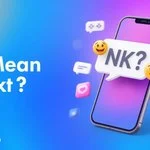
NK in text usually means no kidding. People use it to say really? or I’m serious. In gaming chats, it can also mean nice kill.
You open a chat. A friend sends one word: nk. You stop and stare. Is it a joke? Is it a code? You want a fast answer, and you want it now.
You are not alone. Text slang moves fast, and NK meaning in chat changes with the app and the crowd. It shows up in texts, comments, DMs, and game lobbies. If you guess wrong, your reply can sound odd or rude.
This guide gives you the clear answer first, then the details. You will see real chat examples, easy replies, and tips on when to use NK and when to skip it.
Definition and Meaning: What Does NK Stand For?
The NK full form in most chats is no kidding. It is a short way to show surprise or to say I mean it.
Here are the main meanings you will meet:
- No Kidding: you are surprised, or you agree strongly.
- Not Kidding: you want people to know you are serious.
- Nice Kill: a gamer praises a good play.
- Not Known (N/K): the fact is unknown.
- North Korea: used in news talk, not slang.
- NK cells: a medical term for natural killer cells.
Only the first four are text slang. The last two are outside meanings you may see in searches.
The meaning depends on the mood of the chat. Look at the message before it. That is your best clue.
Example 1: Surprise
Maya: I got the job. Starting Monday.
Zoya: nk?? That’s amazing!
Example 2: Serious
Ben: Are you really moving to Dubai?
Omar: nk. Flight is booked.
Example 3: Gaming
Ray: Clutched the last round.
Ali: NK bro!
Notice the pattern. NK is short, fast, and casual. It works best between friends.
One more thing. NK is not as fixed as LOL or BRB. No official rule sets its meaning. So a smart reader checks the context. When in doubt, ask. It takes five seconds and saves a lot of confusion.
Background and History of NK
Text slang started because typing was slow and messages were short. Early phone texts had tight limits. Chat rooms and instant messengers in the 1990s and 2000s pushed people to type less. So people cut words down to letters.
The phrase behind NK is much older than texting. No kidding has been common in American English for many decades. People said it out loud to show surprise or to say that’s true. When chat culture grew, it was natural to shriNK it to two letters.
Here is the honest part. NK has no single, proven origin. No one can point to the first person who typed it. It grew the way most slang grows: many people, in many chats, doing the same shortcut.
Over time, its use changed:
- Early chat era: long forms like no kidding were common.
- Smartphone era: two-letter forms like NK became easier to tap.
- Gaming era: players used it for quick praise, like nice kill.
- Social media era: short replies in comments and DMs made NK more visible.
Today, you see NK most in casual talk. It is less popular than terms like NGL, FR, or IKR. That is why many people get confused when they see it.
Language changes fast. A term can spread in one friend group and stay unknown in another. So if NK feels new to you, that is normal.
Usage in Various Contexts
NK changes a little with each place you use it. Here is how it looks in the most common spots.
Texting
In private texts, NK is a quick reaction. It shows surprise or agreement.
Sara: Guess who I saw at the mall? Our old teacher.
Hina: nk! What did she say?
Social media
In comments and DMs, NK works like a small wow or for real. It is short, so it fits fast replies.
Comment: This phone lasted me six years.
Reply: nk, mine died in two.
Gaming
Here NK often means nice kill. Players type it after a great play. Speed matters, so they keep it short.
Zed: Three enemies down in ten seconds.
Kai: NK man, that was clean.
Casual conversation
Among friends, NK can be light and playful. It can also show a bit of sarcasm.
Dan: I studied all night.
Lee: nk? You looked fresh this morning.
A quick tip
Read the tone. If the chat is about news, NK likely means no kidding. If it is about a match or a game, it may mean nice kill. If you still cannot tell, ask: Do you mean no kidding?
Also note the punctuation. nk! feels happy. nk. feels flat or firm. nk? feels like a question. Small marks change the mood, so read them.
Common Misconceptions and Clarifications
Many people thiNK NK has one fixed meaning. It does not. That is the biggest mix-up.
Misconception 1: NK always means no kidding.
It often does, but not always. In gaming, it can mean nice kill. In a spreadsheet chat, N/K may mean not known.
Misconception 2: NK is the same as JK.
No. JK means just kidding, which is the opposite. NK says I’m serious. JK says I’m joking.
Misconception 3: NK is a rude word.
It is not rude on its own. Tone makes the difference. No kidding can sound warm, or it can sound sarcastic.
Misconception 4: Everyone knows NK.
Many people don’t. If you send NK to someone older, or to someone outside your circle, they may not understand. Write the full words if it matters.
Misconception 5: NK is only slang.
No. NK can be initials, a country code, or a medical term. Context is everything.
Example of a mix-up
Rita: He scored fifty points.
Tom: nk
Rita: Wait, do you mean no kidding or nice kill? 😅
Tom: No kidding. Sorry!
This small talk shows why clarity helps. When a message could go two ways, one short question fixes it.
A last note for search readers: when you type NK mean in text into Google, you want the chat meaning, not the country or the medical term. Always match the meaning to where you saw the message.
Similar Terms and Alternatives
NK has many cousins. Each one shows a different feeling. Here is a simple list:
- NGL (not gonna lie): you are being honest.
- FR (for real): you agree or you are surprised.
- IKR (I know, right?): you share the same view.
- SRSLY (seriously): you want proof or you are stressed.
- JK (just kidding): you were joking.
- NP (no problem): you are fine with it.
- TBH (to be honest): you are sharing an honest view.
- IDK (I don’t know): you have no answer.
- BTW (by the way): you add a side note.
Here is a quick table:
| Term | Meaning | Feeling |
| NK | No kidding | Surprise or serious |
| FR | For real | Agree or shock |
| NGL | Not gonna lie | Honest |
| JK | Just kidding | Playful |
| SRSLY | Seriously | Doubt or stress |
If you want a different way to say NK, try these:
- For real?
- No way!
- Seriously?
- I mean it.
- That’s true.
Full words also work. They are clear to every reader. When you are unsure your friend knows NK, use a common option like FR or for real. That keeps your message safe and easy to read.
How to Respond to NK
Your reply depends on the person and the mood. Here are simple styles.
Casual replies
- Yep, totally serious.
- Yeah, I know, right?
- For real!
Example
Amir: Your team won 5–0.
You: nk?
Amir: Yep. Check the score.
Funny replies
- No kidding, Sherlock 😄
- Wow, breaking news!
- You don’t say!
Use these with close friends only. Some people may read them as sarcasm.
Professional replies
If a coworker sends NK, keep your answer clear and calm.
- Yes, that is correct.
- Understood. Thanks for confirming.
- I’m serious about the deadline.
Privacy-conscious replies
Sometimes NK comes in a chat where someone is digging for details. You don’t have to explain.
- Let’s keep that private.
- I’d rather not share more.
- Let’s talk about something else.
If you are confused
Ask a clear question: Do you mean no kidding? A quick check is better than a wrong guess.
Match your tone to theirs. If they write in short bursts, answer short. If they write in full lines, do the same. Tone matching makes chats feel smooth and friendly.
Regional and Cultural Differences
Slang does not travel the same way everywhere. NK is mostly seen in English-language chats, and even there it is not universal.
In the United States and Canada: no kidding is a very common phrase. So NK feels natural to many young users there.
In the UK, Australia, and similar places: people may say no way, seriously, or get out. NK is less common, but people can still guess it.
In South Asia: many people mix English with local languages when they text. You may see short forms like NK next to Roman Urdu or Hinglish words. The meaning can shift with the chat, so read the full message.
In Korean-language talk: the letters NK often point to North Korea, not slang. Context matters a lot.
In gaming: NK as nice kill travels across countries, because online games mix players from many places. English gaming terms often stay the same worldwide.
Here is a chat that shows a language mix:
Farah: Kal match jeeta.
Bilal: nk? Score kya tha?
Farah: 3–1.
In this chat, NK works like really? It fits the moment.
Some cultures also prefer full words in writing. In those places, heavy slang may feel too casual. So thiNK about who is reading.
The safest rule: use NK with people who already use it. Watch how your friends type. Copy their style. If they never use it, don’t start with a stranger.
Comparison with Similar Terms
NK, FR, NGL, and IKR look alike, but each one does a different job. Here is a clear comparison.
| Term | Best use | Tone | Formal? |
| NK | Show surprise or say I’m serious | Casual, sometimes sarcastic | No |
| FR | Agree or ask for proof | Casual, friendly | No |
| NGL | Share a real opinion | Honest, direct | No |
| IKR | Say you feel the same | Warm, shared | No |
| SRSLY | Show doubt or stress | Strong, dramatic | No |
| JK | Say you were joking | Light, playful | No |
Key differences:
- NK vs JK: NK means serious. JK means joke.
- NK vs FR: FR is more common. NK is shorter but less known.
- NK vs NGL: NGL introduces an honest opinion. NK reacts to a fact.
- NK vs IKR: IKR shows shared feeling. NK shows surprise or firmness.
- NK vs SRSLY: SRSLY is louder. NK is quieter.
Example
Nina: I ran ten miles today.
Paul: FR?
Nina: NK. Here’s my watch.
Example: honest tone
Paul: NGL, I could never do that.
Nina: IKR. It was hard.
See how each term does its own work? Pick the one that fits the feeling you want. If you want to be safe and clear, for real beats NK because more people know it.
Usage in Online Communities and Dating Apps
Online spaces use fast, short talk. NK fits that style, but each place has its own habits.
Twitter (X) and Instagram comments
Short replies are normal. NK works as a quick reaction to a bold post or a surprising fact.
Post: Coffee prices are up again.
Reply: nk, I noticed last week.
Gaming communities
Discord servers and in-game chat use NK for nice kill or no kidding. Watch the flow of the match. Praise after a kill usually means nice kill.
Kai: Sniped him from across the map.
Zed: nk!
Dating apps like Tinder
On dating apps, tone is delicate. NK can feel playful, but it can also sound cold if it is your only reply.
Match: I climbed a mountain last weekend.
You: nk?? Tell me more!
Add a follow-up. It shows real interest.
Tips for responding well
- Read the mood first. Is the chat funny, serious, or flirty?
- Add words after NK. A lone NK can feel dry.
- Avoid slang with new matches. Clear words build trust.
- Stay polite. If a message feels off, you can say, Not sure what you mean.
- Protect your privacy. Don’t share personal details just because someone says nk.
A simple rule: slang is a spice, not the meal. Use a little, then talk like a human.
Hidden or Offensive Meanings
Good news: NK is not an offensive term on its own. It has no known rude meaning in common slang. But context can change how it lands.
The main risk is sarcasm. No kidding can mean that’s obvious. Imagine this:
Lena: The exam is hard.
Max: nk.
Max might mean I agree. He might also mean Of course it’s hard, we all know. Without a voice or a face, readers guess. That guess can start a small fight.
Other things to watch:
- Mixed meanings: NK can mean a country, a name, or a medical term. Don’t assume.
- Initials: NK may be someone’s initials, like N.K. In that case it means a person.
- Group jokes: some friend groups create private meanings. Ask if you don’t know.
- Political talk: when NK points to North Korea, the topic may be sensitive. Stay respectful.
Why tone matters
Text has no voice. People fill the gap with their own mood. If the reader is upset, NK may feel rude. If the reader is happy, it may feel fun.
How to stay safe:
- Add an emoji or a soft word: NK 😊 or nk, wow!
- Use full words in serious chats.
- Ask when unsure.
- Never use slang to dodge a serious question.
Clear words prevent hurt feelings. That is the smartest habit in any chat.
Suitability for Professional Communication
NK is not a good fit for formal or work settings. It is casual, it is short, and many people don’t know it. In an email to a boss or a client, it looks careless.
Here is why:
- It can confuse people. A manager may not know what NK means.
- It may sound sarcastic. No kidding can feel sharp in a work chat.
- It hurts your image. Clear writing builds trust.
Some workplaces have relaxed chat channels. Even then, be careful. Use NK only with close teammates who already use slang. And never use it with clients, in reports, or in formal emails.
Professional alternatives
- That’s correct.
- I understand.
- That’s surprising. ThaNK you for sharing.
- I’m serious about this.
- Please confirm.
Example
Manager: The launch date moved up by a week.
Employee: Understood. I’ll adjust the schedule today.
That reply is clear, calm, and polite. Compare it with just nk. Which one would you trust more?
A simple test: if you would not say it in a meeting, don’t type it in a work message. Save short slang for friends and hobby chats. In work chats, full words show care and respect.
FAQs
1. What does NK mean in a text message?
NK usually means no kidding. It shows surprise or says you are serious.
2. What does NK mean on Snapchat or Instagram?
On both apps, it is most often no kidding. It works as a quick reaction in chats and comments.
3. What does NK mean in gaming?
In games, NK often means nice kill. Players type it after a great play.
4. Is NK the same as not kidding?
Yes, they are close. Both show you are serious. Not kidding is often used to stress a claim.
5. Is NK rude?
No. But it can sound sarcastic in the wrong tone. Add a friendly word or emoji if you want it to feel warm.
6. How do I reply to NK?
Match the mood. Try for real, yes, I’m serious, or ask, Do you mean no kidding?
7. Can I use NK at work?
It’s best to avoid it. Use clear words like understood or that’s correct instead.
Conclusion
So, what is the NK meaning in text? It usually means no kidding. It shows surprise, or it says I’m serious. In games, it can mean nice kill. Outside slang, NK can also point to North Korea or NK cells.
The key lesson is simple: context decides the meaning. Read the chat, check the tone, and look at the app you are on. If you still feel lost, ask a short question. It is friendly and smart.
Use NK with friends who know it. Skip it at work. Add a few words after it so your message feels warm, not flat. And remember the neighbors of NK: FR, NGL, IKR, and JK. Each one has its own job.
Slang keeps changing, but clear talk never goes out of style. Now the next time you see NK pop up, you will know exactly what to do.
Read More!
MBB Mean In Text? 👀
FNF Mean In Text? 🔥 2026 Guide
YG Mean in Text? Every Meaning, Explained Fast