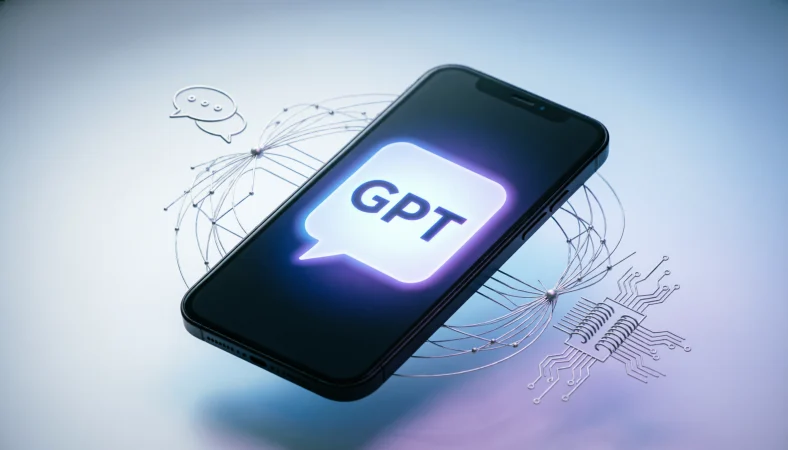
In most texts, GPT stands for Generative Pre-trained Transformer, the type of AI model behind tools like ChatGPT. If a friend texts you I used GPT to write this, they mean an AI chatbot, not slang.
You’re scrolling through a group chat, and someone drops: lol just ask GPT. Or maybe you saw it in a tweet, a Discord server, or even a work email. Your brain pauses for half a second. What does GPT actually mean here?
You’re not alone. GPT has quietly become one of the most-searched acronyms of the decade, and it shows up everywhere texting, social media, gaming lobbies, and even boardroom meetings. Understanding this term isn’t just trivia anymore; it’s basic digital literacy in 2026.
This guide breaks down exactly what GPT means, where the term came from, how people actually use it in real conversations, and when (if ever) it might mean something else entirely. By the end, you’ll never have to Google it mid-conversation again.
Definition & Meaning: What GPT Actually Stands For
GPT stands for Generative Pre-trained Transformer. Let’s break that down in plain English:
- Generative it creates new content (text, code, ideas) rather than just retrieving stored answers.
- Pre-trained it learned language patterns by studying massive amounts of text before you ever typed a prompt.
- Transformer the underlying architecture (a type of neural network) that lets it understand context and relationships between words.
Put simply: GPT is a kind of artificial intelligence that reads your input and generates human-like text in response. It’s the technology that powers well-known AI chatbots, most famously ChatGPT, developed by OpenAI.
Real-Life Examples of GPT in Text
Here’s how it typically shows up in everyday conversation:
Friend: How’d you finish that essay so fast? You: Ngl I used GPT to help me outline it.
Coworker (Slack): Can you draft the client email? You: Already did ran it through GPT first, just need your review.
Gamer (Discord): bro just ask GPT how to beat this boss lol
In every case, GPT is shorthand for an AI language model, not a person, a place, or a private code word. When someone texts GPT, they’re almost always referring to generative AI full stop.
Background & History: Where Did GPT Come From?
The term GPT didn’t start as internet slang, it started as a technical research term. OpenAI released the first GPT model in 2018 as an experiment in unsupervised language learning. Each version got more capable:
- GPT-1 (2018) proof of concept, barely known outside AI research.
- GPT-2 (2019) gained attention for generating surprisingly coherent text.
- GPT-3 (2020) the first version that felt genuinely conversational and creative.
- ChatGPT (2022) the moment GPT went mainstream, turning a research acronym into a household word almost overnight.
- GPT-4 and beyond increasingly multimodal, handling text, images, and more.
What changed everything was accessibility. Once ChatGPT launched as a free, easy-to-use chatbot, GPT stopped being a term for engineers and became a term for everyone students, marketers, parents, and teenagers texting each other about homework.
Today, GPT is used so casually that it’s almost become a generic verb-adjacent term, similar to how Google replaced search the internet. People say ask GPT, GPT wrote this, or sounds like GPT without ever thinking about the technical architecture behind it.
Usage in Various Contexts
GPT shows up differently depending on where the conversation is happening.
In Texting
Mom: Did you write this yourself? You: Sort of GPT helped me fix the grammar.
Here, GPT is used almost like a tool reference, similar to saying spellcheck or autocorrect, but far more powerful.
On Social Media
Tweets and captions often use GPT as a punchline or credibility check:
This caption was 100% GPT, no shame. Y’all can tell when something’s GPT-generated now lol.
In Gaming Communities
Gamers sometimes use GPT to describe robotic, scripted-sounding responses:
Player 1: Chill out, you’re talking like GPT. Player 2: lmaooo I really did sound like a bot there
In Professional Settings
Manager: This report reads a little generic. Employee: Yeah, I’ll revise the GPT draft with more specifics.
Across every context, the core meaning stays consistent with AI-generated or AI-assisted content but the tone shifts from casual and joking to formal and practical depending on the audience.
Common Misconceptions & Clarifications
Because GPT is a short, catchy acronym, a few misunderstandings pop up regularly.
Misconception 1: GPT is a specific app. Clarification: GPT is a type of technology, not one single product. ChatGPT is a product built using GPT models. Other tools also use GPT-based systems.
Misconception 2: Sounds like GPT is always an insult. Clarification: It can be neutral, playful, or critical depending on tone. Saying this text sounds like GPT often just means it feels a bit generic or overly polished, not necessarily bad, just noticeably AI-flavored.
Misconception 3: GPT and AI are the same thing. Clarification: GPT is one specific family of AI models. AI is the broader category. All GPTs are AI, but not all AI is GPT.
Misconception 4: Using GPT to write something is automatically dishonest. Clarification: Context matters enormously here; using GPT to brainstorm or edit is very different from submitting AI-written work as fully original in an academic or professional setting where that’s against the rules.
Similar Terms & Alternatives
People often use other words interchangeably with GPT, even though they don’t mean exactly the same thing.
| Term | What It Actually Means | How It Differs From GPT |
| AI | Broad field of machine intelligence | GPT is one specific type of AI |
| ChatGPT | A product built on GPT technology | GPT is the underlying model; ChatGPT is the app |
| LLM (Large Language Model) | Category of AI trained on huge text datasets | GPT is a well-known example of an LLM |
| Chatbot | Any program that simulates conversation | Not all chatbots use GPT; some are rule-based |
| NLP (Natural Language Processing) | The field studying how machines understand language | GPT is an application built using NLP techniques |
| Bot | Casual slang for anything automated or robotic | Broader and less technical than GPT |
Understanding these related terms helps you read context clues correctly. If someone says that’s such an LLM answer, they mean the same general idea as that’s so GPT.
How to Respond to This Term
Your response style should match the tone of the conversation.
Casual response:
Lol yeah GPT helped me out, saved me an hour.
Funny response:
Guilty. GPT and I are basically co-authors at this point.
Professional response:
I used an AI assistant to draft the initial version, then edited it for accuracy and tone.
Privacy-conscious response:
I used an AI tool for the first draft, but I didn’t share anything confidential.
The key is matching honesty with context; casual chats allow humor, while professional or academic settings usually call for a clear, direct explanation of how AI was used.
Regional or Cultural Differences
GPT is fairly universal compared to most slang because it’s tied to a global technology, not a regional dialect. Still, small variations exist:
- English-speaking countries commonly use GPT as a verb-like reference (just GPT it).
- Non-English speakers often keep GPT untranslated, even when texting in their native language, since the term is a proper technical name.
- Younger, digitally-native users treat GPT casually and frequently, while older or less tech-familiar users may use it more formally or ask for clarification.
Unlike regional slang that changes meaning across cultures, GPT’s meaning stays remarkably consistent worldwide, a rare example of a tech acronym crossing language barriers with almost no distortion.
Comparison With Similar Terms
| Feature | GPT | ChatGPT | AI (general) |
| Type | Model architecture | Product/app | Broad field |
| Created by | OpenAI (concept) | OpenAI | Multiple companies |
| Used in texting as | GPT wrote this | I asked ChatGPT | AI did this |
| Specificity | Medium | High | Low |
| Common tone | Casual/technical | Casual/product-specific | General/broad |
This table highlights why people sometimes use these terms interchangeably even though, technically, GPT is the engine and ChatGPT is the car built around it.
Usage in Online Communities & Dating Apps
On platforms like Twitter/X, GPT is often used to call out AI-generated posts or jokingly accuse someone of sounding robotic. On dating apps, it occasionally comes up when someone suspects a message was too polished:
Match: This opener is smooth. You: Careful, might be GPT 😉
Match: Lol did you use GPT to write your bio? You: Nope, all me though I wouldn’t judge if I did.
The healthiest approach on dating apps is light humor, not accusation. Assuming someone used AI can come across as judgmental, so keeping the tone playful avoids awkwardness.
In gaming and Discord communities, GPT often appears as a quick suggestion tool reference (just ask GPT for the build) rather than a personal callout.
Hidden or Offensive Meanings
For the vast majority of conversations, GPT has no hidden or offensive meaning; it’s a neutral technical term. However, tone can shift its implication:
- Said sarcastically, wow, very GPT of you can imply something feels fake, generic, or lazy.
- In academic settings, accusing someone’s work of being GPT can carry a serious implication of dishonesty, so it should be said carefully and only when warranted.
Context and tone matter more than the word itself. The same sentence can be a compliment about efficiency or a subtle jab about authenticity, depending on how it’s delivered.
Suitability for Professional Communication
GPT is generally acceptable in professional communication, especially in tech, marketing, and content industries, but precision helps. Instead of casually texting GPT did this, professional alternatives include:
- This draft was generated with AI assistance.
- I used a language model to accelerate the first draft.
- AI-assisted content, reviewed and edited by me.
These alternatives sound more polished in emails, reports, or client communication, while still being transparent about AI involvement which is increasingly expected for trust and credibility in professional settings.
FAQs
1. What does GPT mean in a text message?
It almost always refers to Generative Pre-trained Transformer shorthand for AI-generated or AI-assisted content.
2. Is GPT the same as ChatGPT?
No. GPT is the underlying AI model type; ChatGPT is a specific chatbot product built using GPT technology.
3. Can GPT mean something other than AI?
Rarely, and only in very specific niche contexts (like an unrelated acronym in a private field). In everyday texting, it refers to AI.
4. Is it rude to say that it sounds like GPT?
Not usually it’s often just an observation about tone. It can feel like a light critique in some contexts, so read the room.
5. Should I disclose using GPT in professional emails? It’s good practice, especially if the content is client-facing or academic, to be transparent about AI assistance.
6. Why has GPT become such a common term?
Because AI chatbots became mainstream almost overnight after ChatGPT’s 2022 launch, GPT evolved from a research term into everyday vocabulary.
7. Does GPT mean the same thing worldwide?
Unlike regional slang, GPT’s meaning stays consistent across languages and cultures because it’s tied to a specific global technology.
Conclusion
At its core, GPT means Generative Pre-trained Transformer, the AI technology behind tools like ChatGPT that generate human-like text.
Whether it shows up in a text from a friend, a caption on social media, a gaming chat, or a professional email, the meaning stays largely the same: AI-generated or AI-assisted content.
What changes is the tone playful in casual chats, more formal in professional spaces.
Understanding this simple but powerful acronym helps you navigate digital conversations with more confidence, spot AI-generated content more easily, and respond appropriately no matter where you see it pop up next.
Read More Posts!
- What Does GFN Mean In Text? (Full Meaning Explained)
- GTS In A Text: 4 Real Meanings You Need To Know
- GTG Mean in Texting? (Simple Guide + Real Examples)

I’m Daniel Foster, a passionate writer at GrammerHubs.com, specializing in English meanings, grammar tips, and modern slang explanations. I create clear, engaging, and easy-to-understand blog content that helps readers improve their everyday English with confidence.









2 thoughts on “What Does GPT Mean In Text? The Real Answer (2026 Guide)”